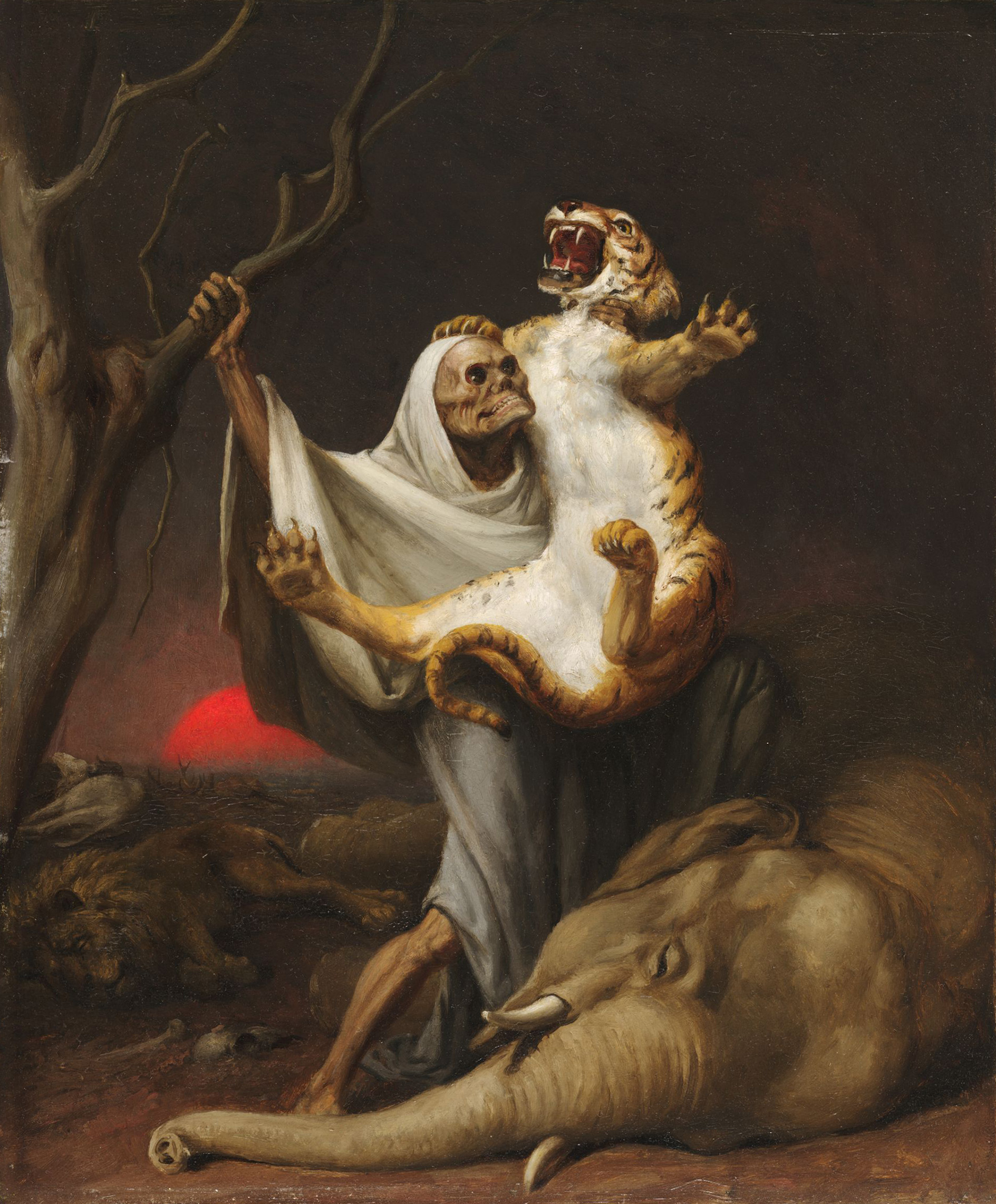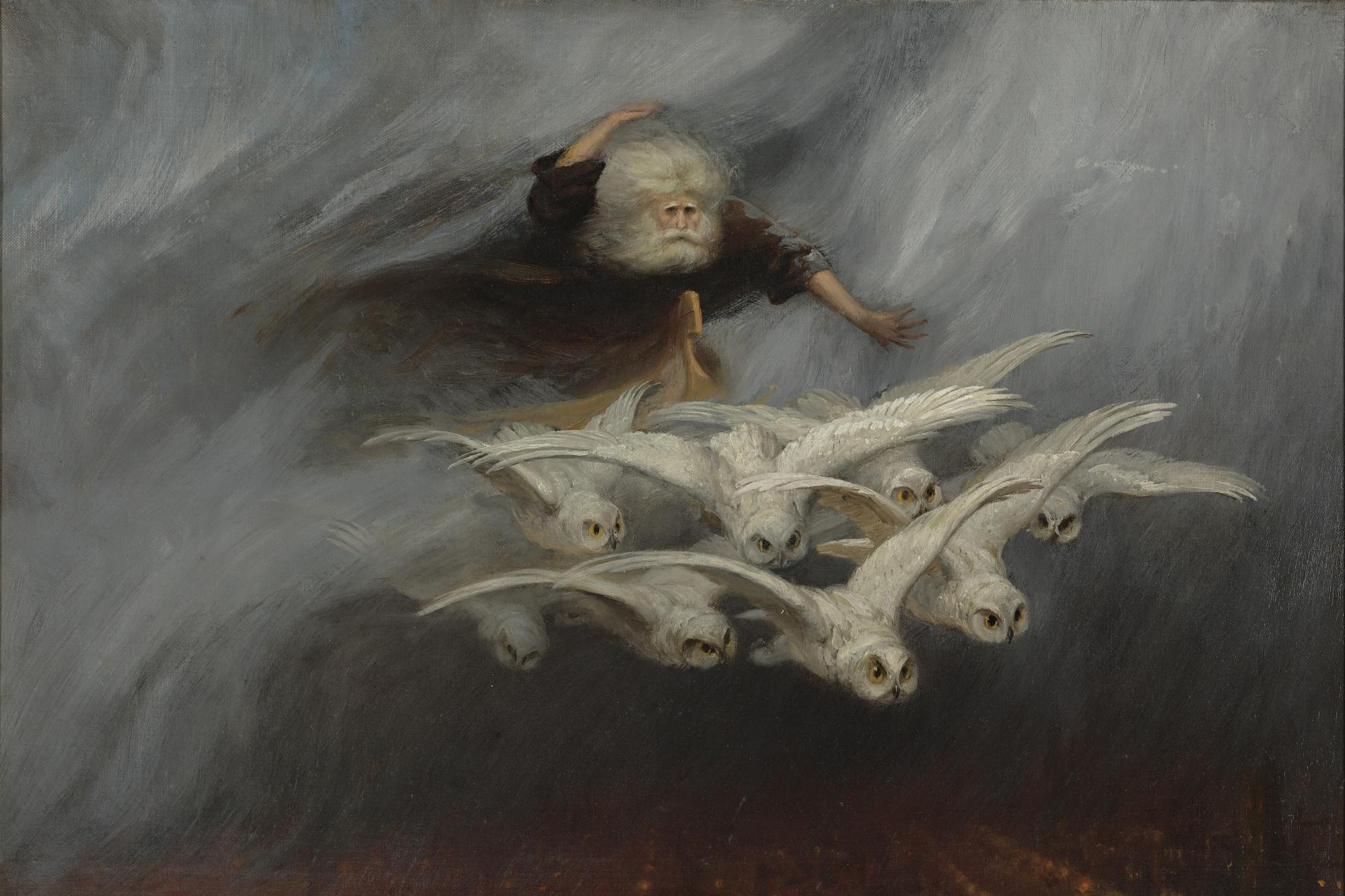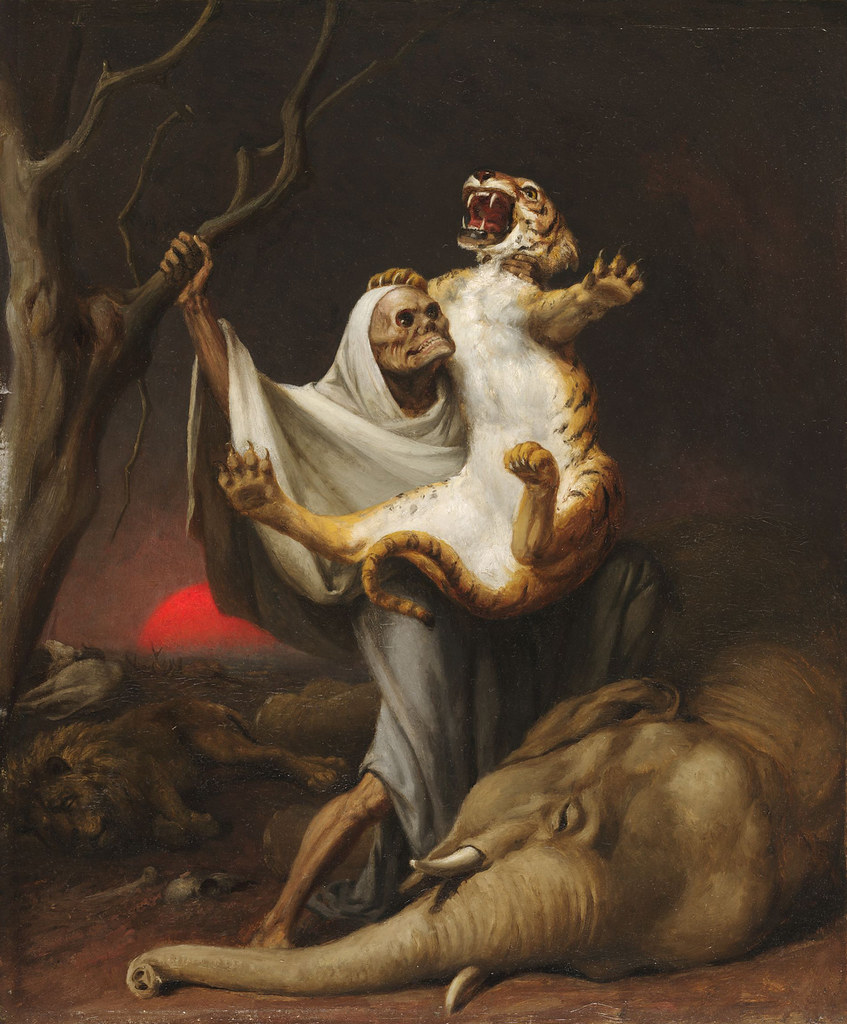
Power of Death, 1889-90
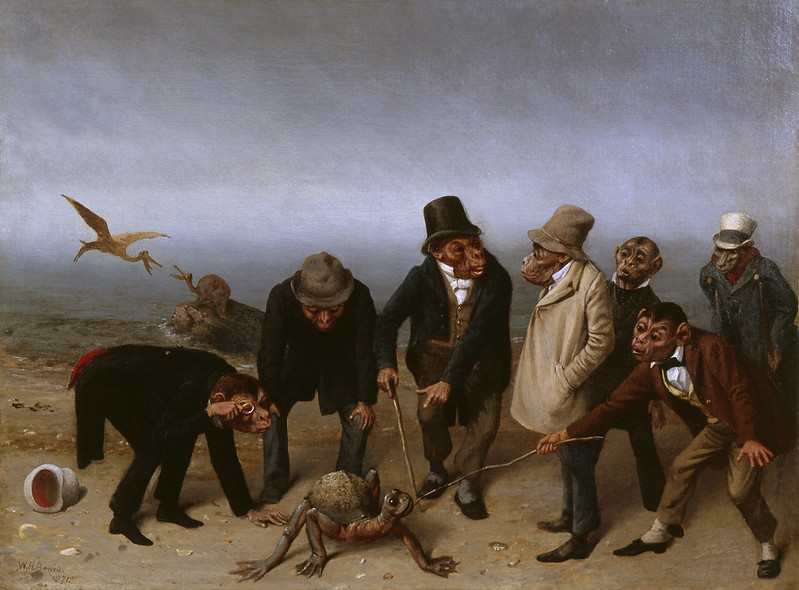
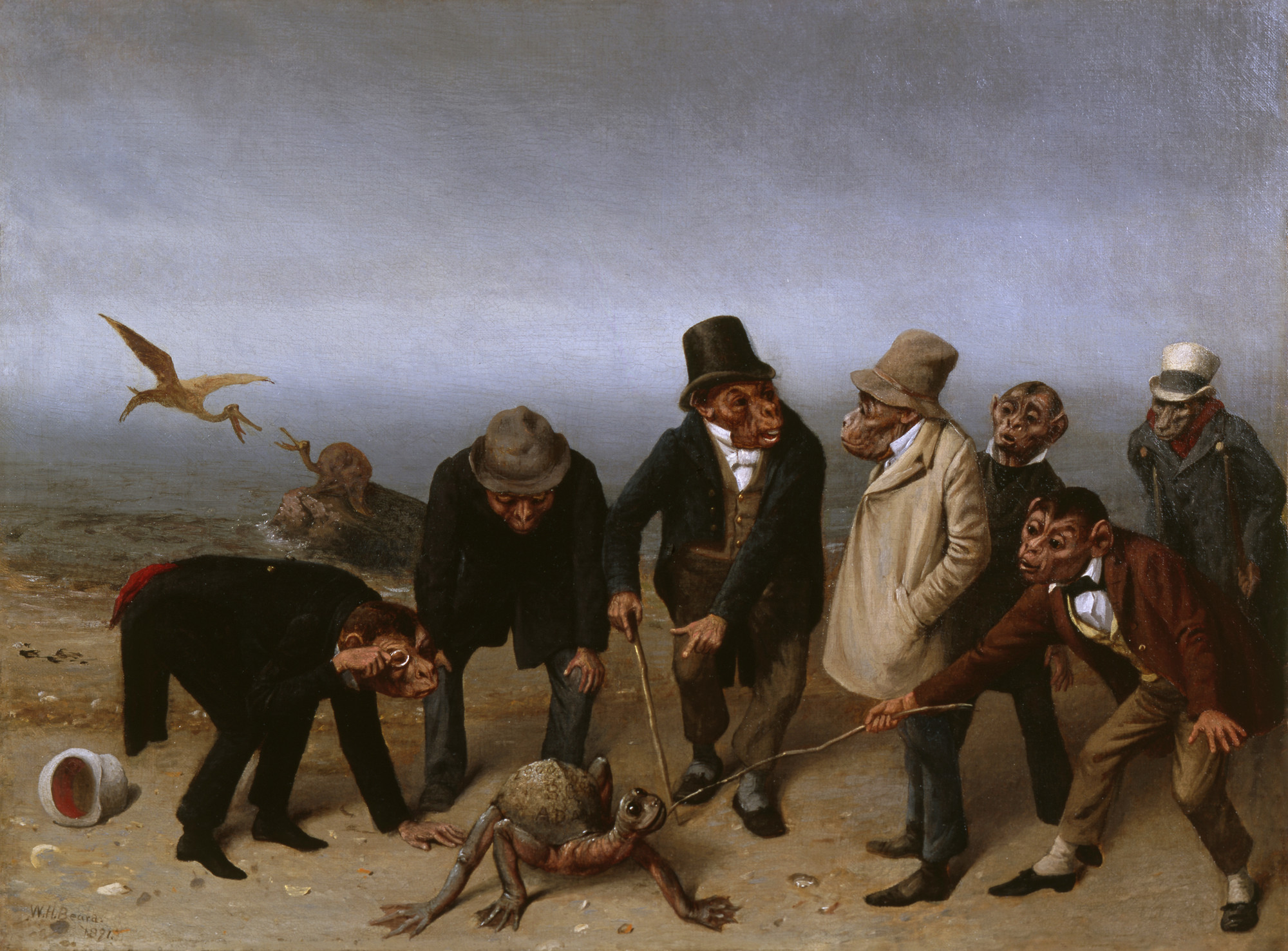
The Discovery Of Adam, 1891
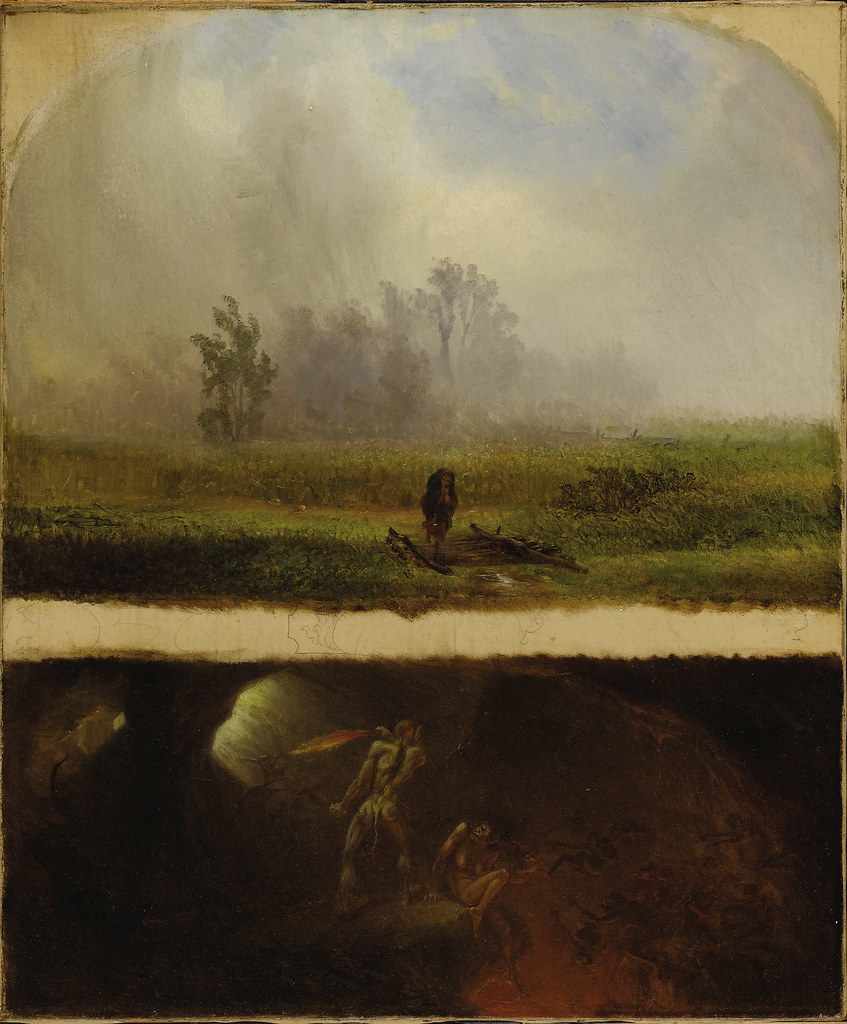
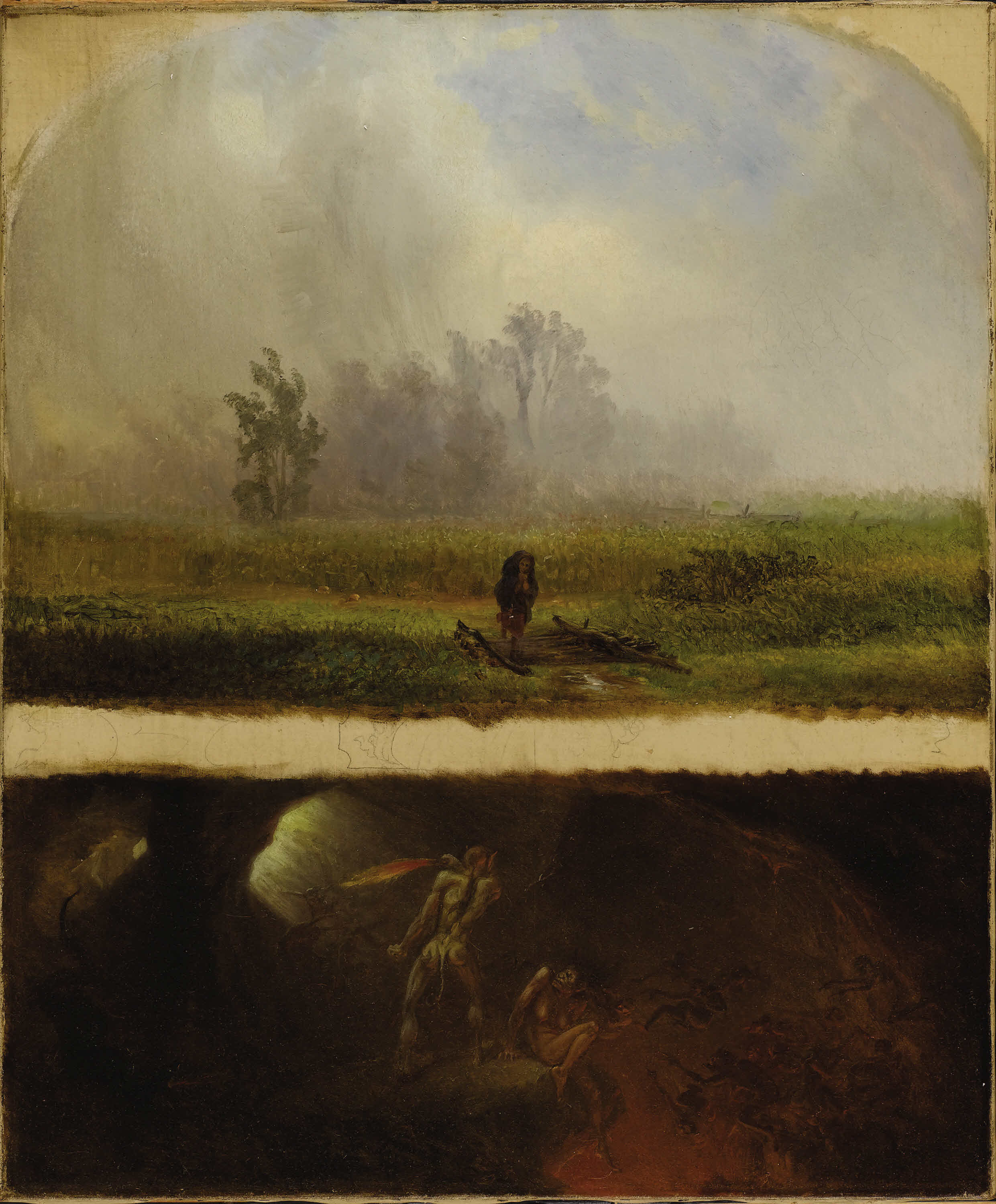
It Rains It Shines, The Devil Whipping His Wife, 19th C
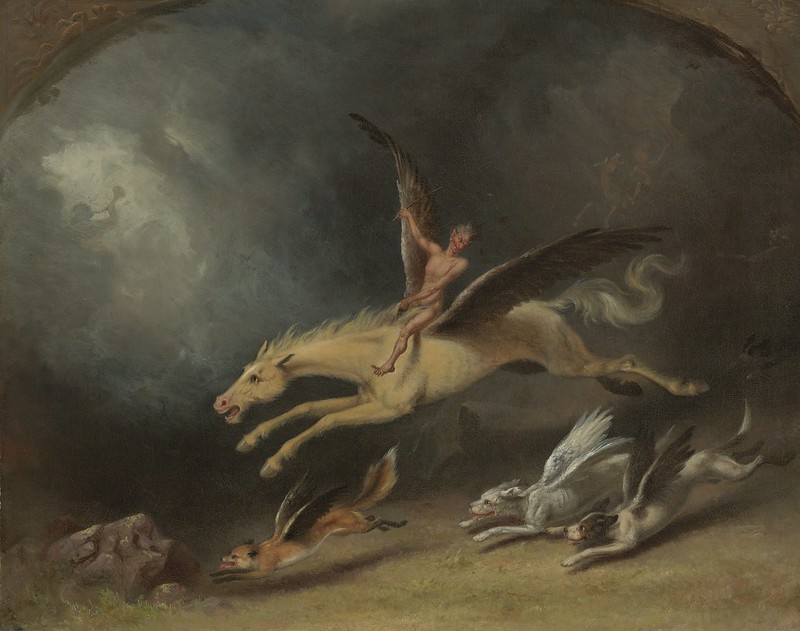
The Fox
Hunter's Dream, 1859
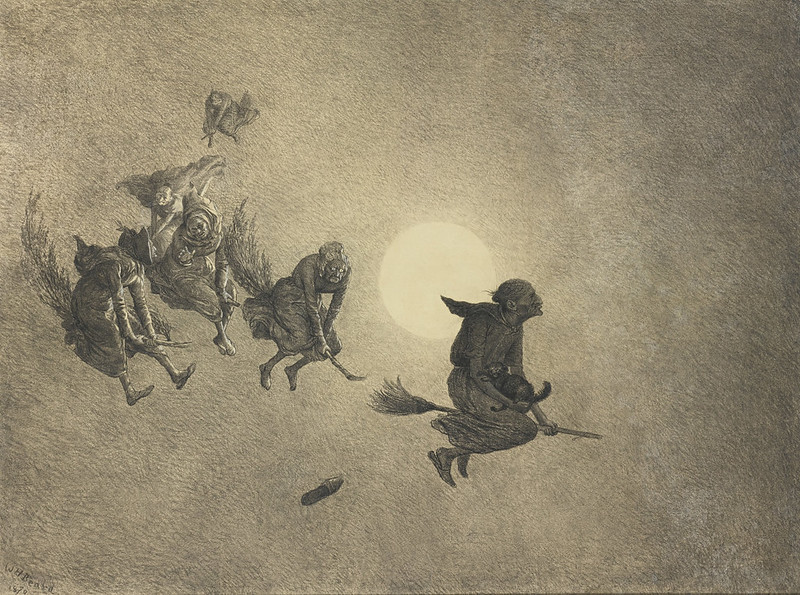
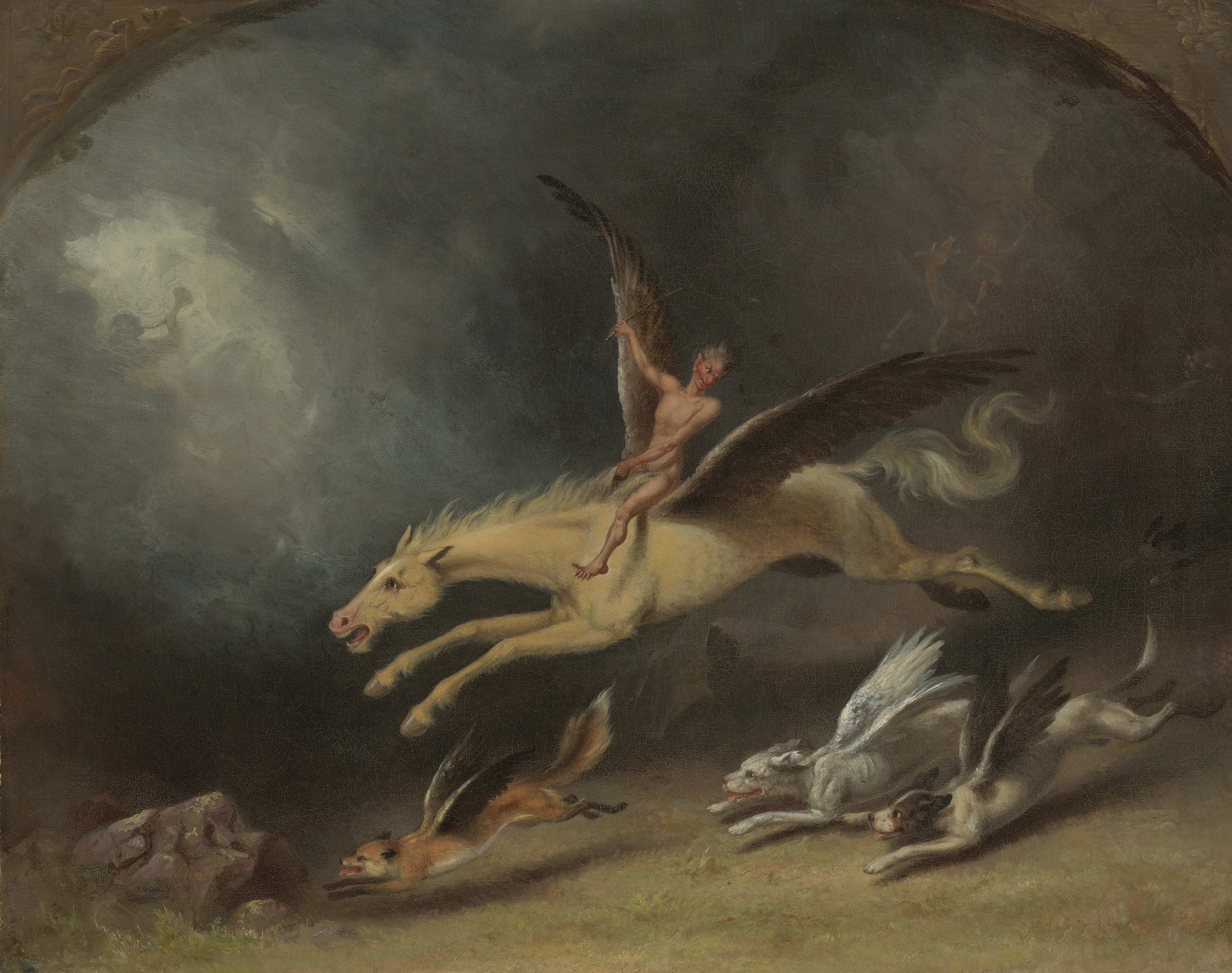
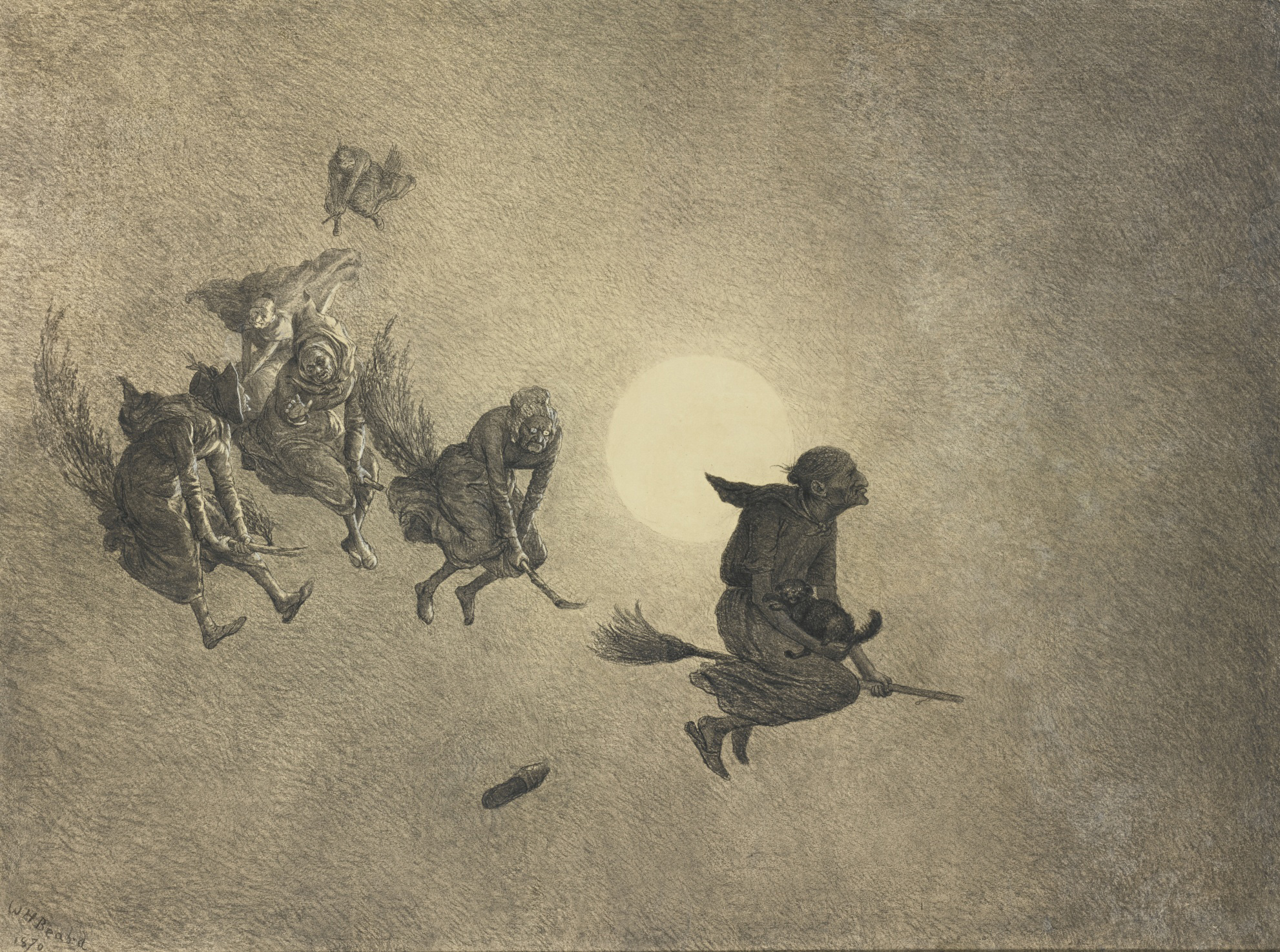
The Witche's Ride, 1870
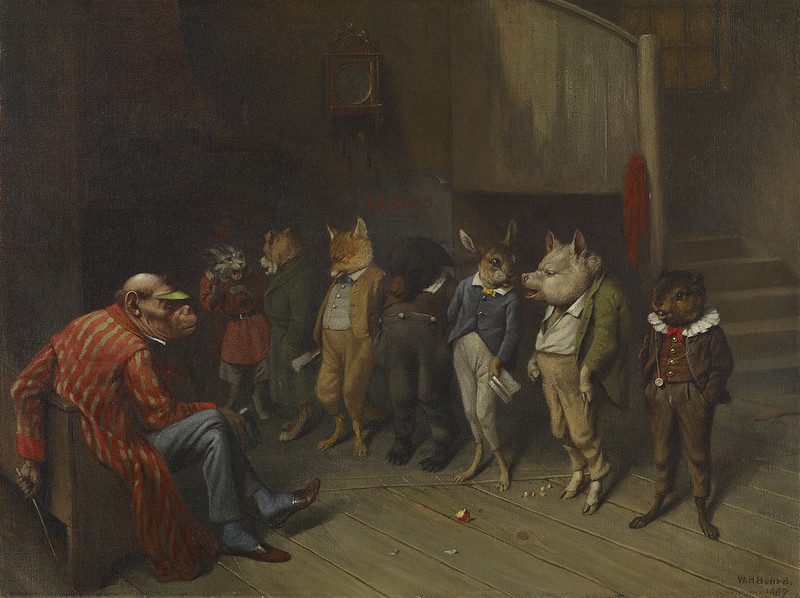
School Rules, 1887
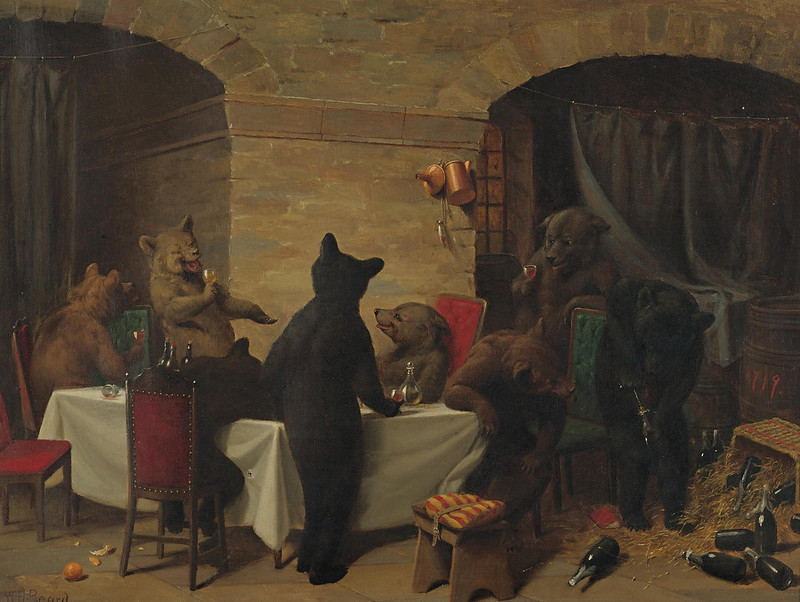
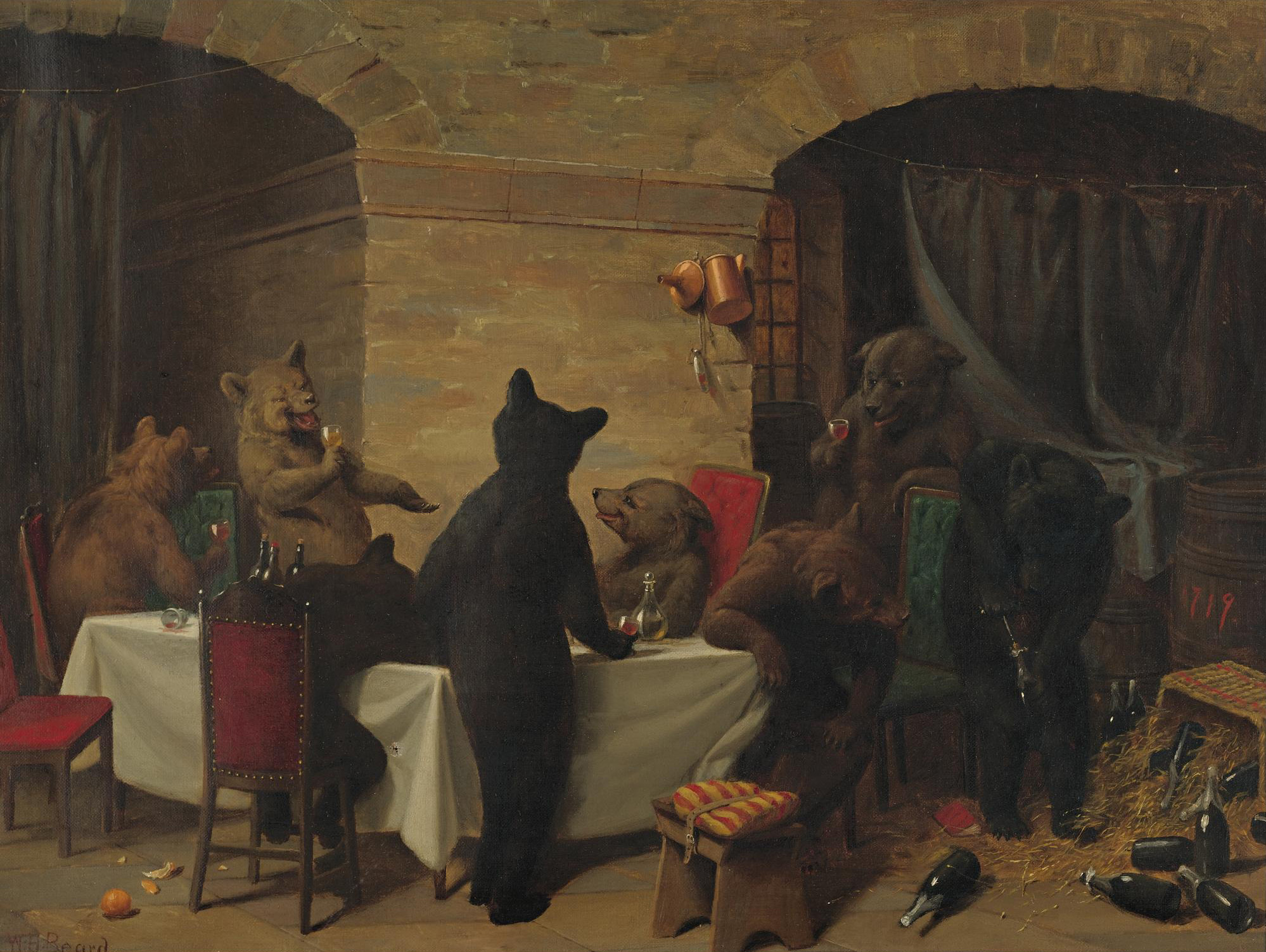
Bear Carousal, 1870
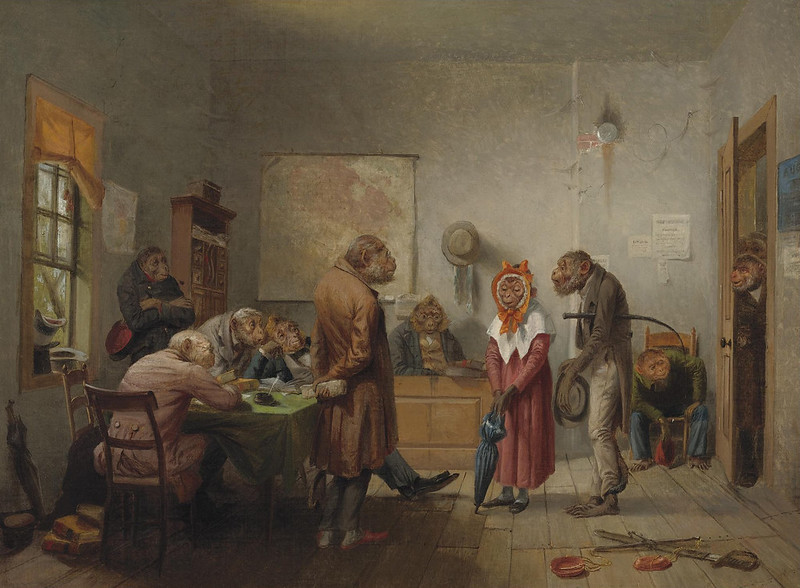
Divorce, 19th C
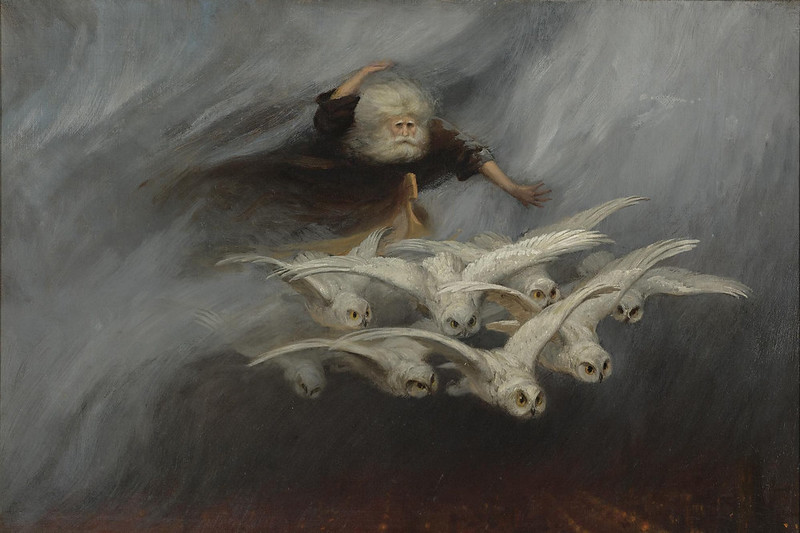
The Four Seasons, Winter, 19th C
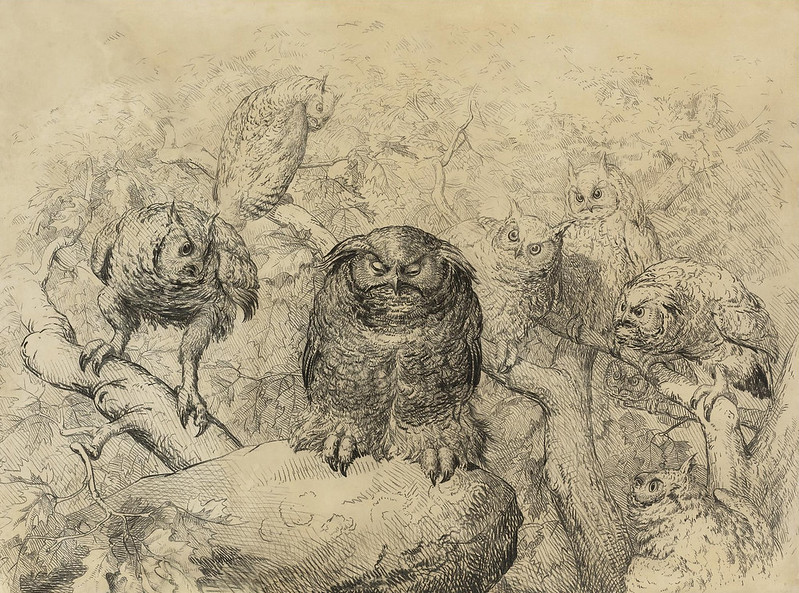
Minerva Reflecting, 1870
"
William
Holbrook Beard (1824-1900), was born into a family of portrait, animal,
landscape, and genre painters in the small town of Painesville,
Ohio, near Cleveland. He is best known for his satiric genre scenes
featuring animals as stand-ins for human beings behaving badly. He
frequently used bears as protagonists. The present work is less
anecdotal, and more hauntingly compelling than many of his
satirical works. In the upper scene, an innocent child has happened
upon a peculiar wooden grate on the ground in a clearing of a misty
field. Noises from below the strange construction attracted the
child's attention and led him to kneel down and listen. In the
lower, underground scene, which is rendered in an entirely
different palette of earth tones and fiery furnace reds, Beard has
painted a scene of a devil flogging his wife. Reminiscent of the
work of Salvator Rosa, the subject is doubtless related to a
literary source, but has a painterly rather than illustrational
quality.
Basically self-taught, the young artist began his career painting
with his older brother James Henry Beard, and then worked for
several years as an itinerant portraitist in his home state. He
moved to New York City in 1845, but by 1850 left the larger
metropolis for Buffalo. There he established a studio and became
close to a group of successful artists including portraitist Thomas
LeClear (whose daughter he married) and Swedish-born landscapist
Lars Gustave Sellstedt, Buffalo's principal mid-century painter.
Beard remained in Buffalo until 1856, the year he left for a
two-year tour of Europe. He traveled extensively, and met and
painted with many American artists including Emanuel Leutze,
Sanford Gifford, Worthington Whittredge, and Albert Bierstadt. Upon
his return to the United States, he spent two more years in Buffalo
before settling into apartments in the Tenth Street Studio Building
in New York, home to many of the nation's most celebrated painters.
After his return from Europe, Beard concentrated upon satirical
animal subjects. As William Gerdts has noted, "One of his most
characteristic and controversial of such paintings was his March
of Silenus (Albright-Knox Art Gallery, Buffalo, New York), a
classical theme reinterpreted with a drunken bear attended by an
entourage of goats, which led to the artist's election as National
Academician in 1862."
In 1866, he traveled West by train to explore the landscape, and in
Colorado his companion was Bayard Taylor, a writer and lecturer.
During the trip, he wrote home to his wife that the landscape was
monotonous, that he was disappointed in seeing so few buffalo, and
the life out West was too hard. As a result of the trip, his
wanderlust was sated, and he turned increasingly to his imagination
as the source of inspiration for the habits and environments of his
wildlife subjects. Many of his later paintings showed animals as
physically realistic but atypical in terms of their behavior." -
quote source
Artworks found at
Heritage Auctions and
Sotheby's.
William Holbrook Beard was previously shared on Monster Brains in
2008.

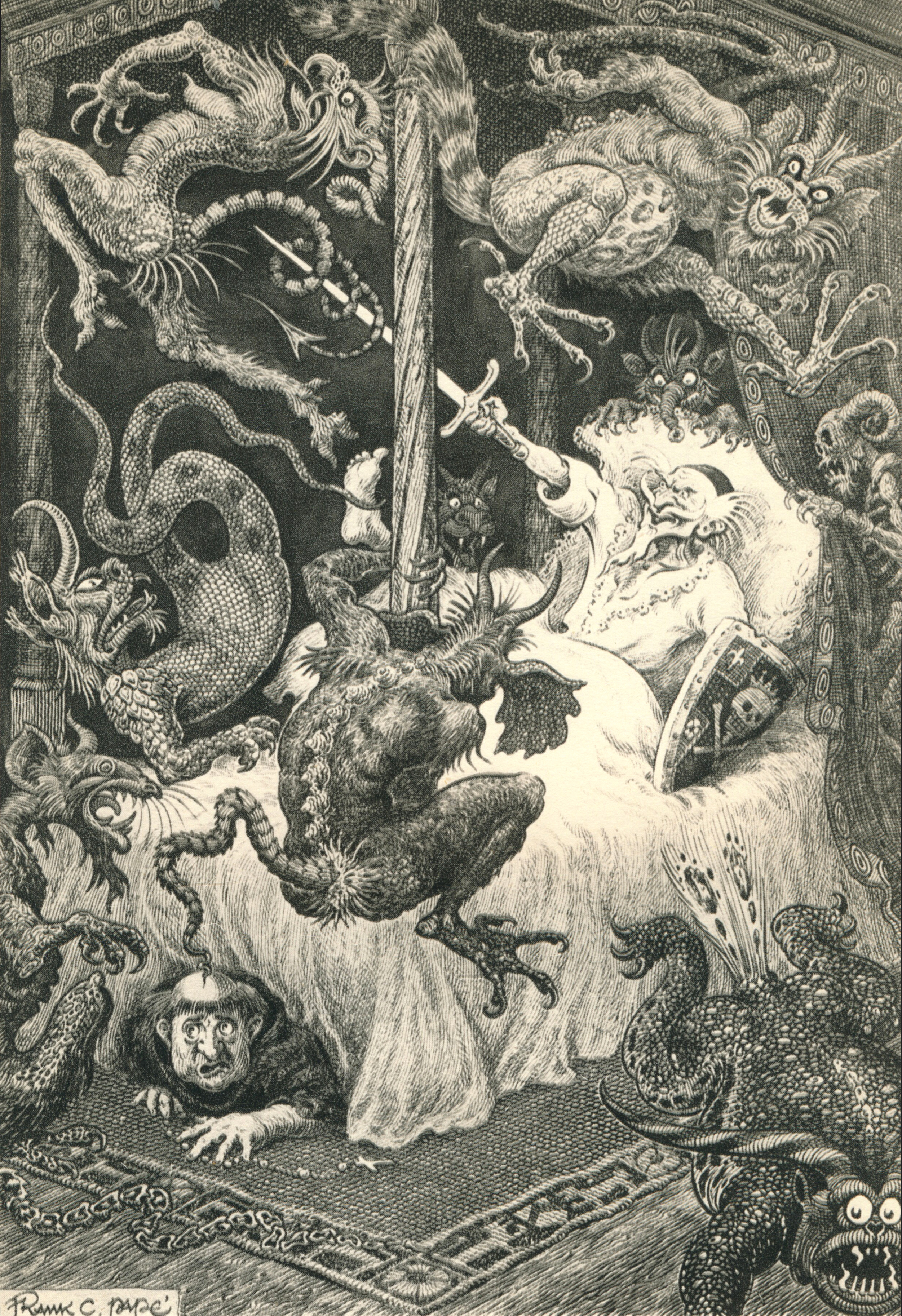 Illustration from Don Quixote Retold by Ronald D.K. Storer, 1961
 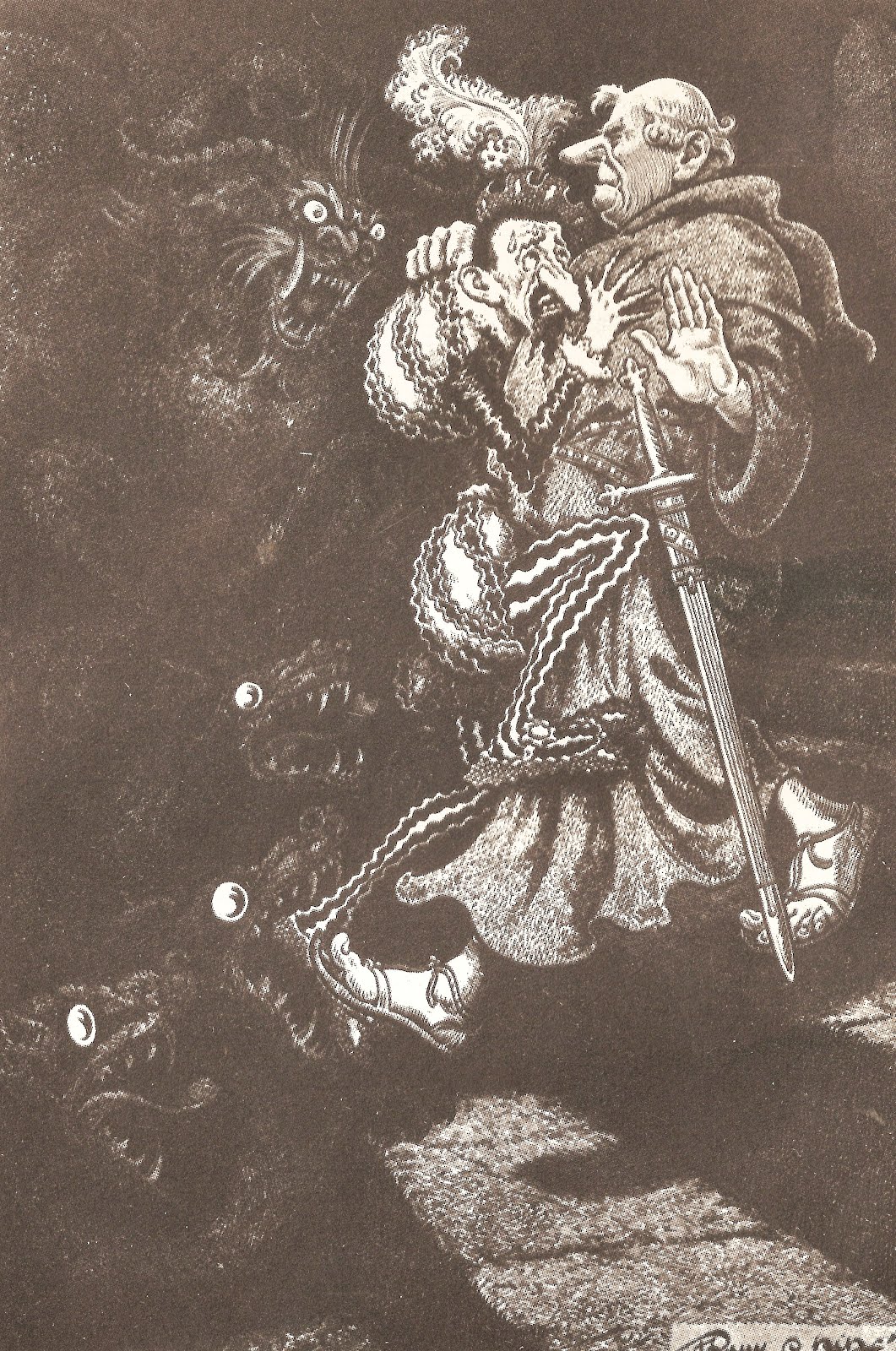 Illustration accompanying the poem "O Where Are You Going" by W.H. Auden
 Endpapers for James Branch Cabell's Jurgen, A Comedy of Justice, 1921
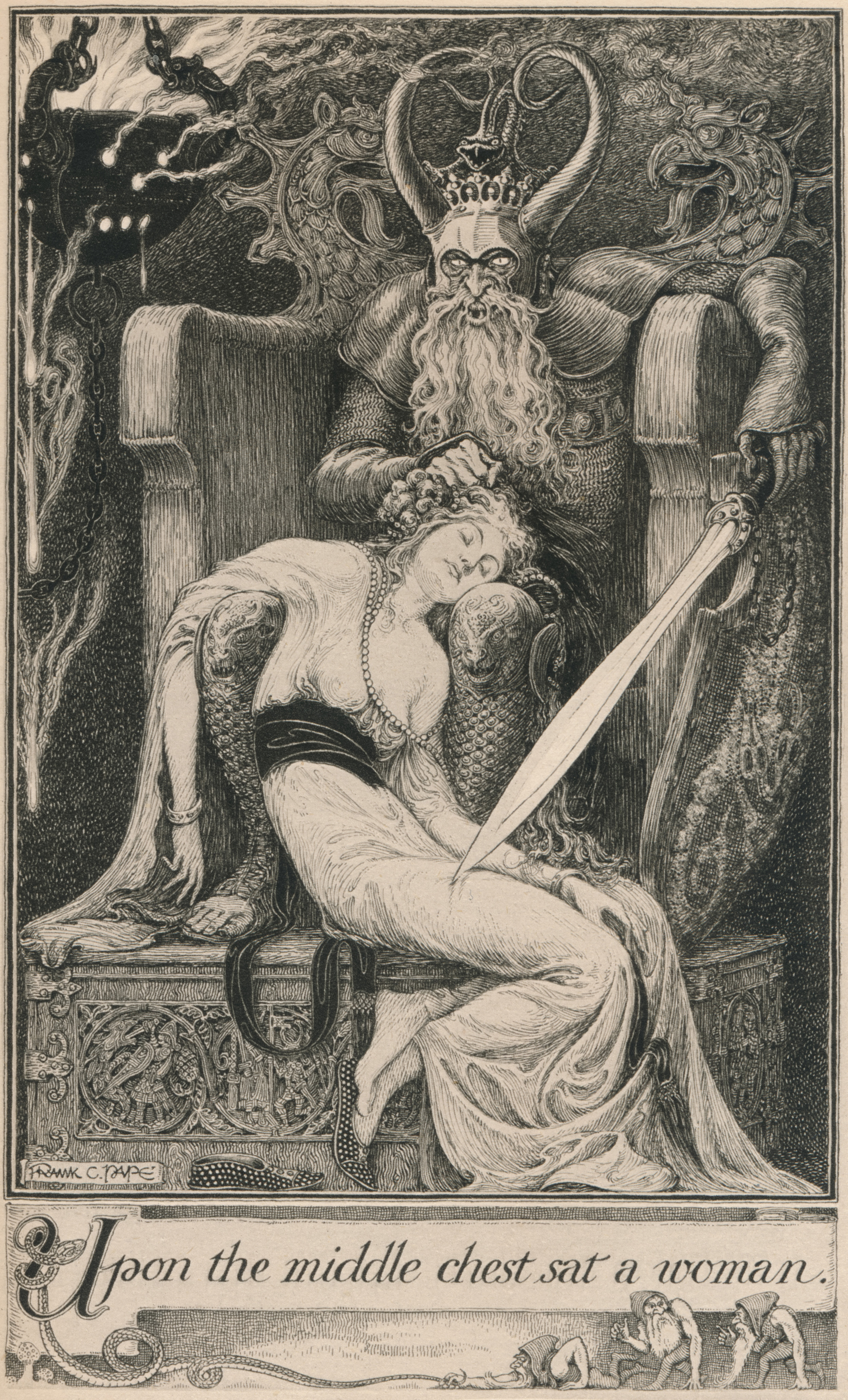 Illustration from James Branch Cabell's Jurgen, A Comedy of Justice, 1921
 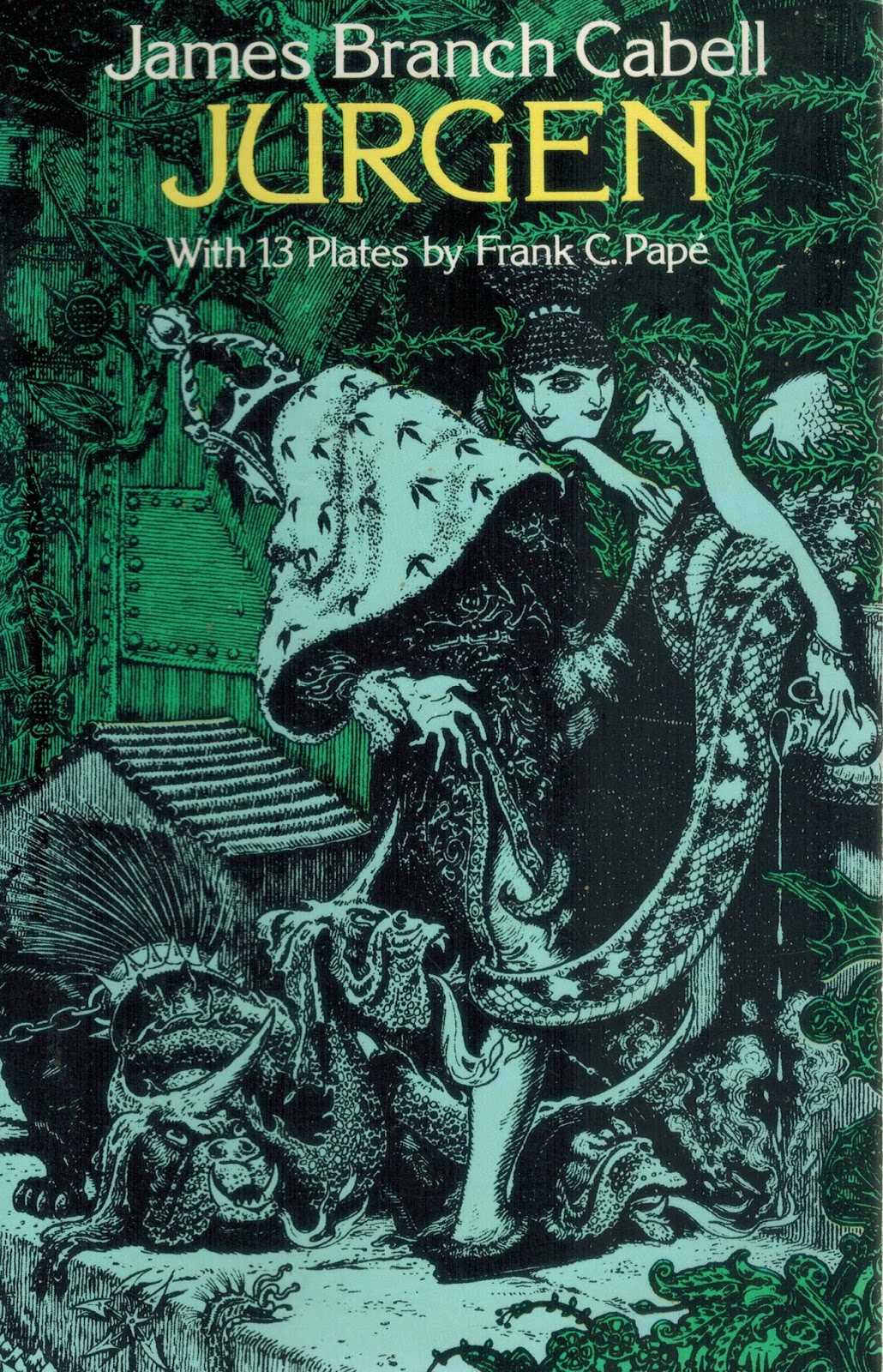 Illustration from James Branch Cabell's Jurgen, A Comedy of Justice, 1921
  Illustration from Penguin Island by Anatole France, 1926